Saturday, December 15, 2012

Restoring Three Forests


I follow with interest the growth of replacement forests in three areas, the mountains of Appalachia, the highlands of Ethiopia, and the flat bottomland of the Arkansas Delta. Efforts are being made to correct man-made removal of natural forests from each of these areas. The work in the mountains of Appalachia is centered on areas exploited for a surface coal mining technique known as “mountain-top removal.” Our friend, beekeeper and author Tammy Horn, is instrumental in bringing people and resources together to change coal mining reclamation sites from hard packed gravel beds into forests designed to increase forage for honey bees and native pollinators. Writing in the newsletter of The American Chestnut Foundation, http://www.acf.org/newsletter11.21.12honeybees.php, Tammy describes the work of her Coal Country Beeworks. While establishing a beekeeping cottage industry, the group is planting the mountains of eastern Kentucky and West Virginia in native trees including sourwood, a famous source for premium honey. The mountain-top restoration efforts also include the planting of American chestnut trees from blight-resistant seedlings. The American Chestnut Foundation and the Appalachian Regional Reforestation Initiative are working to replace the native chestnut, which once accounted for one third of the trees in the southeastern forests. The tree was valuable for its lumber and important as a food source of wildlife.

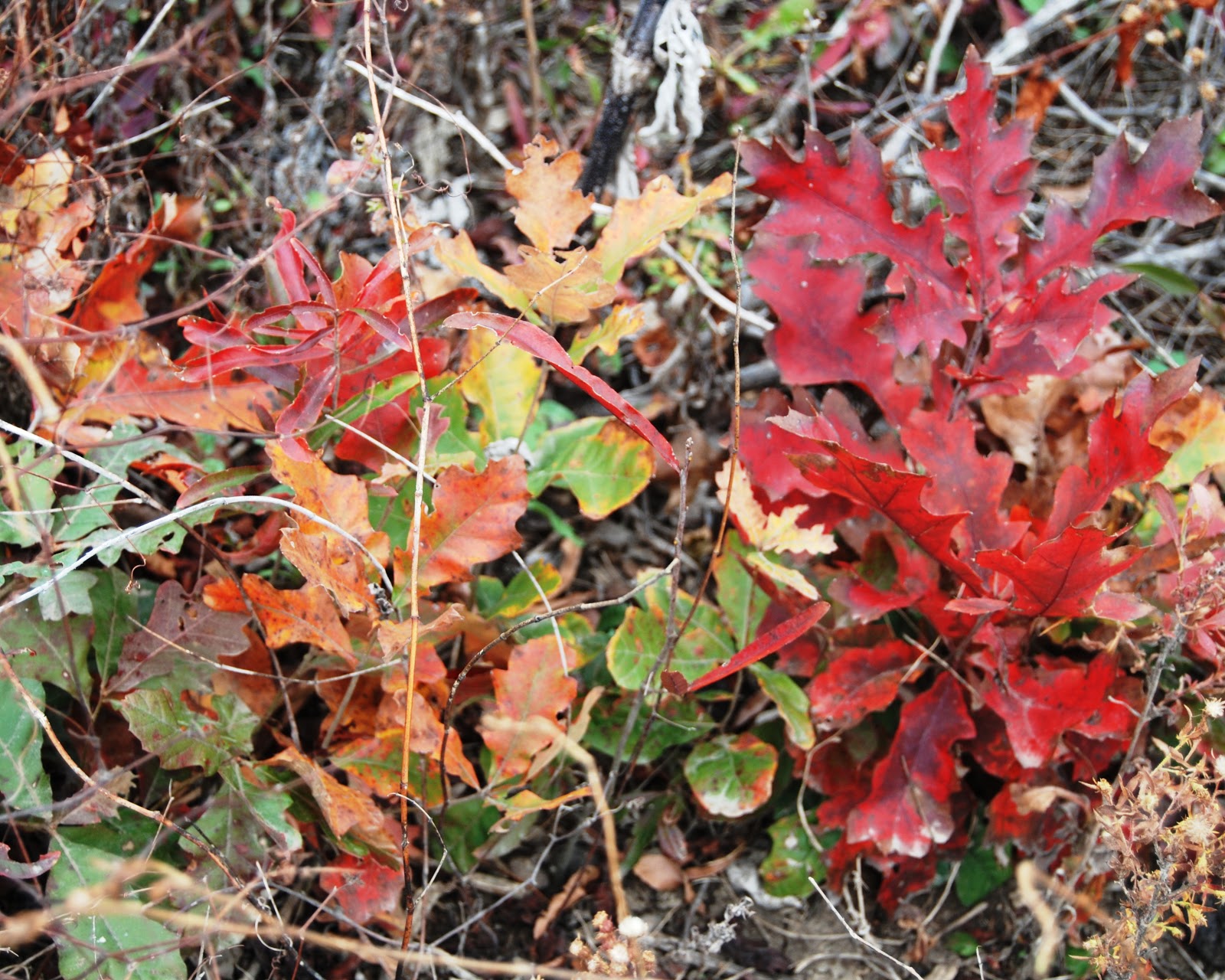
Beekeepers of Ethiopia rely upon forest nectar sources to produce honey as a staple of their agriculture. They are planting highly erodible volcanic slopes of the Bonebunga Area of western Ethiopia in trees to restore land previously cleared for planting crops. They protect the forests from poaching for firewood and building materials by “social fences,” imaginary protective fences built in the minds of those served by the forest. The third replacement forest is a Wetland Reforestation Project on Peace Farm on a tributary of the Mississippi River. We planted native hardwood trees to prevent soil erosion. Today’s picture shows native oaks, hand planted from seed, competing for sunlight. Bayou ridges include nectar source plantings to support honey bees.
--Richard

Thursday, December 6, 2012

Moisture in Honey


A Memphis beekeeper is concerned that his honey may not store safely. If honey is fully ripened, the bees have completely converted flower nectar sugars and evaporated the moisture to about 18 percent. At this point, the worker bees cap the cells with fresh beeswax; and the honey will last forever. This honey may be harvested and stored safely. The surest way to determine that honey is ready to harvest is to examine the honeycombs and only harvest frames that are almost completely capped. It is important for beekeepers to remember that honey is “hygroscopic,” which means that it readily takes on moisture. Harvested frames of honey may take on moisture from the air after they are removed from the hive. The beeswax cappings are somewhat porous, so even fully capped frames of honey may absorb moisture from the air. Honey house dehumidifiers protect honey before it is sealed in air-tight containers.

All honey contains yeast spores from the atmosphere and from environmental surfaces. Honey with a moisture content above 19.5 percent will likely ferment. To prevent fermentation, most commercially handled honey is heated to pasteurization temperature of 150 degrees Fahrenheit and held at this temperature for 30 minutes to kill the yeast spores. Beekeepers test the honey with a refractometer, a simple device that measures the bending of light passing through the honey. If high moisture honey is stored, it has a tendency to ferment. Fermentation readily occurs as honey naturally crystallizes. Crystallization reaches a maximum as honey cools to 57 degrees Fahrenheit. Crystals start forming at the bottom of the honey container, and lock-up the sugar solids. Honey with excess liquid at the top of the container ferments. Honey with 16 to 18 percent moisture content will last indefinitely in sealed honey pails or drums. Beekeepers who want to bottle highly sought-after raw honey that has not been overly heated carefully measure moisture content and only bottle honey with moisture of 18.5 percent or less. Today’s photo: capping honey.
--Richard

Saturday, December 1, 2012

What Happened to the Hive?


A beekeeper asks for my thoughts about the loss of a colony of bees. He explains, “I had a good sized colony, three boxes high, bottom and part of second were a mix of brood and honey, and top was all honey. Earlier in the summer I had another six inch super on top which was filled.” In late August, finding his hive empty, he explains, “There was no sound, in fact there was not one bee, and there was not one dead bee either. Every bee was gone.” However, on the day before, the hive showed much bee activity. Attempting to understand colony losses is curious and worthwhile.

The complete abandoning of a bee hive, called “absconding,” is not common in the temperate zone unless conditions make the hive completely undesirable. Colony Collapse Disorder has drawn much attention in recent years, but the conditions here don’t fit its definition. With CCD, there is a loss of older adult bees, but the hive is left with a queen, nurse bees, and brood. A very common cause of the loss of a colony of honey bees, however, is colony collapse due to Varroa mite infestation. This is particularly common in the time period of late summer, as in this late August case. Honey bee colonies grow rapidly in the spring to produce large populations of foragers to harvest nectar and pollen while flowers are in bloom. The queen slows her egg laying in the summer and the colony population gently declines. Parasitic Varroa mite populations follow a different pattern. Mites in a bee hive increase in number gradually throughout the year. By late summer bee numbers are declining while mites are increasing. As the Varroa mites bite bees, they spread bacterial, fungal, and viral infections throughout the colony, eventually killing it. Why was there plenty of hive activity the day before? Robber bees were removing honey stores. Today’s photo shows guard bees challenging incoming foragers. Guards are absent from dead hives.
--Richard

Thursday, November 29, 2012

Cotton and Bees


Crops grown in today’s modern industrial agriculture employ improved seed, chemical pesticides and fertilizers, irrigation, and heavy machinery. Farmers are keenly aware of industrial agriculture’s impact on the natural world, and most producers are diligent stewards of the environment. They take great care in protecting their land and the wildlife that lives on it. Cathy Foust, Shelby County, Tennessee’s Extension Director, invited me to attend a presentation on protecting pollinators by Dr. Don Parker, Integrated Pest Management Manager with the National Cotton Council. Also attending were several other beekeeping friends, Richard Coy, president of Arkansas Beekeepers Association, Charles Force, president of Memphis Area Beekeepers Association, and Jon Zawislak, apiary instructor with University of Arkansas Extension Service. The audience of interested agricultural producers listened intently as Dr. Parker discussed the impact pesticides make on honey bees and native pollinators. Many of the producers were not aware that honey bees forage cotton fields. Some had not considered the effect of cotton insecticides on beneficial insects; they had only concentrated on killing pests. Cotton growers asked numerous questions of the beekeepers and seemed to be equally interested in protecting pollinators.

Dr. Parker spoke of some of the difficulties involved in protecting beneficial insects while trying to control pest insects with insecticides. One suggestion was to only apply insecticides at night while bees are not flying. Dr. Parker mentioned how dangerous it would be to fly a crop duster at night with cotton fields surrounded by trees and power lines. Such practices are completely unacceptable. Cotton growers and beekeepers were interested in discussions of the effect on beneficial insects when spraying insecticides on crop plants with “indeterminate growth” in which pollinators are continuously attracted by nectar. Here, bees can be poisoned even when the crop is not blooming. Other insecticide spraying challenges exist with plants, like cotton, which have “extrafloral” nectaries secreting nectar outside the flower. Today’s photo: a honey bee and a bumblebee, a native pollinator, share fall goldenrod near cotton fields.
--Richard

Tuesday, November 13, 2012

Abandoned Bee Hives


When honey bees swarm they frequently move into cavities previously used by other colonies of bees. They are attracted to old bee nests by hive odors of beeswax, honey, propolis, pollen, bees, and their pheromones. It is common for a colony of honey bees to occupy a hollow tree for a couple of years and then die after being weakened by parasitic Varroa mites. Even if the combs are destroyed by hive scavengers, like wax moths and small hive beetles, the cavity is likely to attract another colony of bees. The same sequence of events commonly occurs when people attempt to drive honey bees from the walls of their houses. Old colonies are soon replaced by new colonies. Colonies of bees replace one another so frequently that it may appear a hive is occupied continuously when it actually held a series of different colonies. The attractiveness of hive odors makes old bee hives effective bait hives for capturing swarms in the spring and summer. Old abandoned bee hives are attractive to swarming honey bees as well.

I received a call asking me to remove bees from some abandoned hives. I found a very large feral colony occupying a stack of rotting hive bodies. While wood rot and termites had consumed most of the woodenware, combs were held together by propolis. One by one, I transferred the frames of brood into new hive boxes. After all intact frames were moved, a number of broken pieces of brood comb remained. I placed these in a nucleus hive. After several weeks I found the feral queen hiding among the broken combs in the nucleus hive. The bees in the larger hive produced a new queen. I now have two strong hives with good behavior and characteristics. I welcome these locally-adapted feral genes into my bee yards. Was the colony in the abandoned hive equipment truly feral? Possibly, or its queen may have been purchased from a breeding program by another beekeeper. Lucky find.
--Richard

Wednesday, November 7, 2012

Parasitic Mite Syndrome


Beekeepers are detecting large populations of parasitic Varroa mites in their hives this fall. The Varroa mite is the most serious pest of honey bees in America. Though the mite weakens honey bees by sucking their blood, called hemolymph, they cause the most hive damage by spreading disease through the bee colony. Varroa mites reproduce inside the capped bee hive cells containing the pupa stage of developing bee brood. The parasitic mites pierce the exoskeleton of honey bees with their mouth parts to suck nutrients. The perforations caused by the mites allow entry of bacterial, fungal, and viral infections. At least 15 honey bee viruses are spread by Varroa mites. The combined effect of these honey bee diseases is known as Parasitic Mite Syndrome. Hives experiencing PMS often show reduced populations of bees as they decline and eventually collapse. One easily recognizable symptom of PMS is the existence of young bees in the hive with diminished, curled wings as the result of Deformed Wing Virus. Varroa mite populations increase steadily in bee hives anytime that bees are reproducing. Mite populations large enough to collapse colonies typically occur in the late summer and early fall. Beekeepers should measure mite populations and, if necessary, treat the hives with “soft” treatments of organic acids or essential oils.

Parasitic Mite Syndrome produces brood patterns with numerous empty cells as opposed to continuous patterns of capped cells. Some of the empty cells result from workers removing honey bee pupae that they detect having mites reproducing and developing with the bee pupae. This genetically heritable honey bee activity, known as “hygienic behavior,” is the basis for Varroa resistant honey bee stock. In today’s photo we see a brood frame from a hive showing signs of Parasitic Mite Syndrome. The brood pattern is “spotty;” a number of capped cells have been opened, and the bees are chewing out the pupae. Other hive conditions, such as American foulbrood and chilled brood, may have a similar appearance.
--Richard

Monday, November 5, 2012

Fall Bee Hive Management


In the fall it is important to look inside the bee hives and set them up for winter. Fall bee hive management is designed to help the bees survive the winter. This week I checked bee hives with Corinth, Mississippi beekeeper, Heidi Hendrix, and my 12-year-old grandson, Ethan. There are two important issues for over-winter success: food and hive ventilation. We make sure that the brood nest is located low in the hive with frames of capped honey above. To get this arrangement, we may need to move frames or rearrange hive bodies. It is the tendency of honey bees to move upward in the hive over the winter. The heat of the bees’ winter cluster warms the stored honey above the cluster; the bees eat this honey; and then they move up to occupy the empty cells. If the bees begin the winter with their brood nest located high in the hive, they may not move down to feed on available honey stores. It is frustrating for beekeepers to find honey bee colonies that starved while there is plenty of available honey stored inches away from the bees’ winter cluster. If the hive is light in weight when one end is lifted, the bees need feeding. For fall feeding, “heavy” syrup of two parts sugar to one part water is readily converted to honey and stored.

The second important issue in bee hive set-up for winter is ventilation. Bee hives are warm and damp on the inside. Cold winter temperatures outside the hives cause condensation to form on the inside hive walls. The effect is opposite that of a glass of iced tea on a hot, damp Delta summer day where condensation forms on the glasses’ outside surface. Water dripping in the hive can kill bees. A small vent at the top of the bee hive is all that is needed to remove hive moisture. Today’s photo shows a full box of capped honey above the brood nest.
--Richard