Showing posts with label Ethiopia. Show all posts

Friday, December 21, 2018

The Winter Solstice

The sun rose this morning as far south along the horizon as it will appear anytime through the year. We call this day the winter solstice. This is also the year’s shortest day. Starting tomorrow, the sun will appear to rise slightly farther to the north daily until the summer solstice, June 21, when the sun rises in its northern-most position. These apparent movements of the sun along the horizon have been observed since ancient times. They allowed early peoples to develop calendars, vitally necessary for telling farmers when to plant precious seeds needed to feed increasing populations. The life cycles of many species are tied to the seasonal changes associated with the length of days. Among those species is the honey bee. For the honey bee, the winter solstice is the beginning of the new year. Queen bees start laying eggs on the winter solstice.

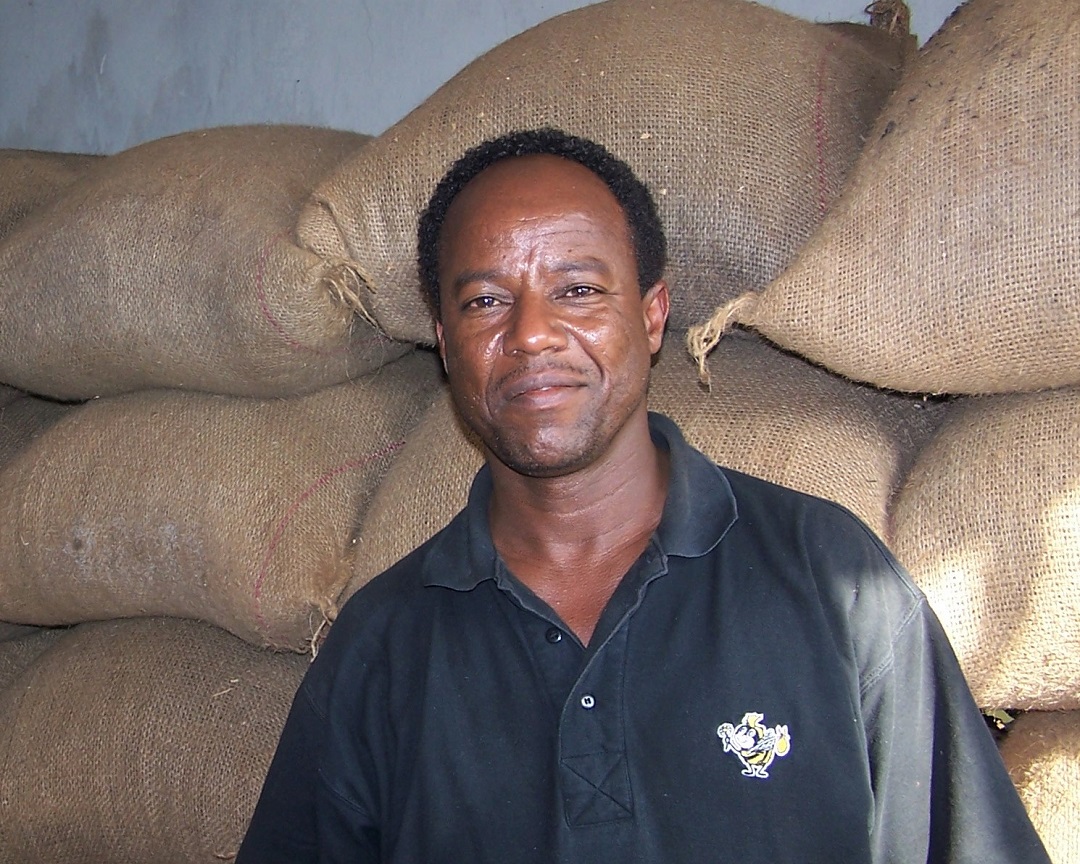
Here, in the temperate zone, the blooming of most flowering plants follows the length of days as well, blooming spring, summer, and fall. Few flowers are found in the winter, and the life cycle of the honey bee follows the availability of flowers. The bees gather nectar from flowers, convert it into honey, and survive on it through the winter. The honey bee is unique, being the only insect in the temperate zone that stays alive and active throughout the winter. Honey bees eat the high-energy honey that they produce and generate heat by vibrating their flight muscles. They are thus able to survive in cold weather, clustered tightly together to retain warmth. Other insects, like lady bug beetles, hibernate in cold weather, protected under tree bark or leaves. Wasps, hornets, and yellowjackets die off annually, leaving a mated queen to start the next year’s colony. I communicated today with my friend, EAS Certified Master Beekeeper Wubishet Adugna, in Ethiopia, shown here with coffee that he exports. Wubishet’s tropical honey bees follow seasonal changes based upon annual rainfall patterns instead of the length of days.
--Richard

Sunday, December 24, 2017

Pax Vobiscum

Wubishet Adugna hosted me in his home country of Ethiopia when I travelled to Africa as a USAID-funded volunteer, charged with teaching modern beekeeping techniques. Together, we travelled extensively through the Ethiopian highlands visiting beekeepers, farmers who tend honey bees in apiaries and tree tops sites. The farmers manage bees and tend crops, gardens, and livestock. When I taught beekeeping classes in Wubishet’s training facility at Bonga, Ethiopia, I spoke in English, and Wubishet translated my words into Amharic. Travelling together, we had the opportunity to discuss beekeeping traditions in detail. I am sure that we each learned from each other. I certainly learned much about honey bees and beekeeping from Wubishet. In part, I learned that much of the western literature on beekeeping in the tropics did not accurately describe beekeeping in Ethiopia’s diverse semi-tropical geography. Together, Wubishet and I shared our understanding of the art and science of beekeeping. The combination of these traditions is to me the joy of beekeeping. In our classes, we demonstrated how to manage honey bees in modern Zander bee hives, harvest honey and beeswax, and produce candles, cosmetic products, and mead. Ethiopia’s traditional beverage is tej, a most-enjoyable mead wine.

It was my great honor to sponsor Wubishet when he travelled to the United States and successfully completed the tests to become an Eastern Apicultural Society Certified Master Beekeeper at the 2017 EAS conference at the University of Delaware. Wubishet is the first EAS Master Beekeeper from the African continent. Wubishet teaches the art and science of beekeeping to farmers as an important part of Ethiopia’s mixed agriculture. My son, Peace Bee Farm beekeeper, Tod Underhill, had the opportunity to work with Wubishet on separate occasions. Here, you can see Wubishet and Tod enjoying a liter of tej in Addis Ababa. I encountered Christians, Muslims, and Naturalistic Believers living in harmony in Ethiopia. For these people and others, the Underhills of Peace Bee Farm extend our wish that peace be with you.
--Richard

Saturday, December 24, 2016

Pax Vobiscum

A scene in an upcoming motion picture depicts a young man’s chance encounter with a swarm of bees that results in life-changing awareness for himself. The movie, Dayveon, will be aired in Utah on the first day of the renowned Sundance Film Festival in late January 2017. Emily and Jeremy Bemis and I were the film’s bee wranglers, producing an artificial swarm for the camera. The film, directed by Amman Abbasi of Little Rock, tells the story of a 13-year-old who joins a gang in a rural Arkansas town. You can see the bees and read how we created a swarm on a tree limb on my August 18, 2015 posting, “Wrangling Movie Bees.” Throughout history, people have been intrigued by honey bees. Often it is such a chance encounter with swarming bees that excites people to learn how to handle bees.

In the United States, beekeeping is both an important part of our agriculture and an engaging hobby. In the highlands of Ethiopia, beekeeping is a major part of a mixed agriculture, adding significantly to insuring food stability. I am proud to have had the opportunity to train eager beekeepers in the art and science of managing honey bees in both countries. Beekeeping classes, taught by Jeremy Bemis and me, at Bemis Honey Bee Farm in Little Rock attract large numbers of beekeepers, some starting and others expanding their knowledge and skills. Individuals travel great distances to attend my beekeeping classes in Arkansas State University’s Community Education program at three campuses: Heber Springs, Searcy, and Beebe, Arkansas. Today’s photo is Sugar Loaf Mountain, which overlooks the ASU Heber Springs campus. Almost anyone can keep bees. All that is needed is an interest in observing and attending to marvelous, industrious little creatures living harmoniously in wooden boxes. Classes, books, and mentoring teach the art and science of keeping bees. Be forewarned: Beekeeping can become a life-changing endeavor. The Underhill family of Peace Bee Farm offers that peace be with you.
--Richard

Thursday, December 24, 2015

Pax Vobiscum

I recently completed my tenure presiding over the Arkansas Beekeepers Association. It was a true honor to be entrusted with the leadership of the state’s beekeeping trade association. In this role I had great help. A capable team of committed volunteer leaders from all areas of the state played an important role in planning and conducting the association’s tasks. These leaders, the Officers and Regional Directors of the ABA’s Executive Committee, included James Rhein, Larry Kichler, Britt Bailey, Linda Rhein, Alan Isom, Howard Waddell, Steve Cline, Patrick Edwards, Jeremy Bemis, Howard Hawthorn, Richard Coy, Melissa Mencer, and Jon Zawislak. Each of these individuals assisted in conducting our educational conferences and bee equipment trade shows and assisted roughly 30 local beekeeping associations representing 2000 beekeepers.

Recent years have found me increasingly involved in training and mentoring of beekeepers. I have been conducting beekeeping training classes with Jeremy Bemis at Bemis Honey Bee Farm in Little Rock, Arkansas. We are finding great interest in beekeeping training, especially among the expanding number of new beekeepers. Further, I was honored to be asked to participate in the development of a new beekeeping college located in one of the villages where I trained beekeepers in Africa. My host, Wubishet Adunga, is building the college located at Bonga in the highlands of southwestern Ethiopia. For this project I edited the curriculum for the Apinec Apiculture Technical Vocational and Education Training College. Beekeeping and production of hive products are important for food security in the developing world. The worldwide communications between beekeepers and the efforts being taken to provide training and protect bees and the beekeeping industry is visible in today’s photo. At a meeting of the Eastern Apicultural Society, I noticed a picture of myself inspecting brood in one of my Arkansas bee yards. The picture is on the cover of training manuals published in England by Bee Craft. The Underhills of Peace Bee Farm wish beekeepers and peace-loving people worldwide that peace be with you.
--Richard

Wednesday, November 25, 2015

Nature of Conservation

Judith Rutschman interviewed me on a segment of her TV program, Nature of Conservation. The recent interview was my second filming of the program. Our first interview in 2008 discussed Peace Bee Farm’s activities, mostly producing honey and beeswax products. At that time, a mysterious condition in which the adult worker bees disappeared from their hives was in its second year. We discussed the researchers’ efforts being undertaken to identify the causes of the resulting massive honey bee die-off, called Colony Collapse Disorder, or CCD.

With the passing of seven years, Judith and I revisited Peace Bee Farm’s operations and the condition of honey bees across America and around the world. The continuing die-off of bees brought about ample media coverage, resulting in considerable public interest. Media attention helped bring about a number of university studies seeking the cause of CCD. Peace Bee Farm participated in several of these studies. Many concerned individuals responded by purchasing bees and hives. These new beekeepers eagerly sought beekeeping training and guidance. My role shifted over the next years to more involvement in beekeeping training and mentoring. After a few years of training beekeepers in the Mid-South, I was given the opportunity to travel to Africa to train beekeepers in Ethiopia. In some of my African assignments, I taught experienced beekeepers how to transition from traditional hives placed high in tree tops to modern bee hives. Sometimes I trained seasoned African beekeepers in new skills to share with others when they returned to their local villages. At other times I gave farmers their first lessons in beekeeping. These men and women built Kenyan Top Bar Hives at no cost using materials that they gathered locally: wood scraps, sticks, mud, and cow dung. It was always heartwarming to know that the products of the bee hives, honey and beeswax, helped increase the farmers’ incomes and ultimate survivability. Today’s photo: Judith Rutschman and Richard Underhill. See Nature of Conservation on WYPL, Memphis Channel 24, in December.
--Richard

Wednesday, December 24, 2014

Pax Vobiscum

Our family has operated Peace Farm since 1950. Rita and I introduced honey bee colonies in 2003, and family members produced honey and bee hive products. As we gained knowledge of bees and beekeeping, all members of the family participated in various aspects of tending to bees and producing and selling hive products and bee colonies. Along the way, several of us, trained as educators, became increasingly involved in beekeeping education. Tod Underhill helped me set up the Peace Bee Farmer blog, suggesting that I write down my ideas from time to time. That’s Tod in today’s photo, pictured in Ethiopia with farmers he instructed in beekeeping.

The Peace Bee Farmer blog resulted from my effort to document the bee forage plants on Peace Bee Farm as they came into bloom throughout the year. I had no idea that the writings would become so widely read or that they would put me into contact with so many individuals around the world. The simple writings and photos followed requests to give others a view of honey bees, their life inside the hive, our beekeeping efforts, and people we encounter. I have posted writings on the internet about beekeeping and matters of agriculture and the environment for six years. The Peace Bee Farmer pieces have been accessed at least one million times from two hundred countries. The resulting interactions lead to many valued contacts and friendships in many parts of the US and around the world. With today’s internet, people, anywhere on earth, may find the blog by typing a key word, such as “varroa,” or “beeswax,” or “peace.” In recent years, I noticed that increasingly often individuals accessing the blog from locations in the world’s least peaceful locations. While many find the writings by searching for beekeeping or environmental issues, some happen upon the website while searching for peace efforts. Regardless of how you came in contact with the Underhill family that operates Peace Bee Farm, we sincerely wish peace be with you.
--Richard

Wednesday, December 25, 2013

Pax Vobiscum

This year brought me the opportunity to once again travel to Africa to share ideas with the beekeeper farmers of Ethiopia. I am thankful for the hospitality of the Ethiopian people and of the support of my family who took care of Peace Bee Farm in my absence. I want to acknowledge some of the others who are working to train beekeepers in Africa. Megan Wannarka is a Peace Corps volunteer working daily with beekeepers in Senegal. Stephen Petersen, Cesar Flores, and Ed Levi are Winrock International volunteers working in diverse regions of Ethiopia. Their expertise helped identify bee colony problems which should lead to healthier bees and increased incomes for the Ethiopian farmers. Daniel Kocha and Gemechis Jaleta are thorough in making training arrangements in Ethiopia, and they are both extremely knowledgeable of the needs and resources of the Ethiopian farmers. Johnnie Frueauff handled my travel arrangements with great care. My driver in Addis Ababa, Kassahun Wegayehu, was always friendly and ready to travel, night or day. My host in Ethiopia’s Amhara Region, Behailu Alemayehu, effectively handled the translation from English to Amharic. Driver Daniel safely negotiated the Blue Nile Gorge. I offer my best wishes to Selamawit Abebe, Demke, Teshome, Abeba, Fantahun, Abisu, Sefinew, Haimanot, Getenet Yitayew, Ketemau Melkamu, Tarekegn Wondimagegn, Melkamu Bezabih, Haile Dembosa, and Firewu. I offer my great thanks to Ato Gebeyehu who graciously took me into his home and shared his beekeeping experience with me. In my beekeeping training assignment I was treated with kindness by the people of Debre Markos, Embulie, Yewbush, Amanuel Town, the Machakel District, and Dembecha, West Gonder.

 In today’s photo, I am dwarfed, literally, by the statue of Nelson Mandela at the gallery of renowned Ethiopian artist Lemma Guya. Nelson Mandela passed away December 5 of this year. On behalf of the Underhill family that operates Peace Bee Farm, I offer to all who observe the great religions, traditions, and philosophies of the world: Peace be with you.
--Richard

Thursday, August 8, 2013

Beekeeping, Night or Day?

Ethiopia has a rich tradition of beekeeping, and it seems to me that the country is like a patchwork quilt of beekeeping traditions. There is a mixture of beekeeping practices that follow the country’s diverse nectar sources and differences in geography. The local beekeeping techniques also follow the differences in beekeeping experiences of the farmers. Many rely upon the handed down techniques of traditional beekeepers. Some have been exposed to trainers from outside the region who introduced them to modern beekeeping methods. My experiences in Ethiopia found me working in some areas with beekeepers who had been exposed to training based upon bee biology. These individuals were comfortable with handling bees and were anxious to hear of new ideas that they could apply. I suggested that they should build Kenyan Top Bar Hives with standardized dimensions, like the one in today’s photo that I borrowed from the local agricultural extension agent to use in my training sessions in Amanuel. This top bar hive is built according to measurements adopted by the Peace Corps. By using standardized top bars and hive dimensions, the beekeepers can move combs from hive to hive. I explained to them that they can remove the queen from an exceptionally defensive hive and bring over a comb of very young brood selected from their best hive. With this resource, the bees can produce a new queen with different genetic traits. The farmers, well versed in selective cattle breeding, understood the concept of selectively improving their bees.

I also worked in one area where the farmers had received inaccurate information about bee biology and agriculture in general. These farmers were fearful of the bees and highly reluctant to try my suggestions, especially opening the hives in the daytime. They gave many excuses for not doing this. Some said that they were too busy tending their cattle or plowing in the daytime. I suggested that they train other family members—women and children—to join in the beekeeping.
--Richard

Monday, July 22, 2013

Protecting Quality Honey

Many of the farmers of Ethiopia rely upon harvesting honey and beeswax as part of their mixed agricultural income. The vast majority of their beekeeping experience involves placing traditional bee hives in trees or high places where they can attract swarms of bees. Once the bees have filled the traditional hives with comb and filled some combs with honey, the farmers drive the bees out of the hives with smoke and cut out the combs. The farmers then crush the combs to separate the honey from the beeswax comb. This technique often yields a low-quality honey. Today's photo shows an Ethiopian beekeeper proudly displaying a comb of honey that she cut from a traditional bee hive. The lower half of the comb contains high-quality, fully ripened honey, capped with beeswax. The upper half of the comb, however, contains brood along with pollen, bee bread, and unripened honey. If the entire comb is crushed together, the honey will be of very low quality, useful only for mead production. Throughout the world, much of the honey harvested in developing countries is used to produce mead honey wine.  Uncapped honey that is not fully ripened and honey containing the protein of brood is suitable for fermenting into mead, however it is not acceptable as honey for storage and consumption. Fully ripened honey lasts virtually forever. By simply cutting apart this comb, this beekeeper can separate the high-quality honey from the lower-quality honey. Each can be sold separately.

It is important that the beekeeper protects the quality of the bees' product. Heavy use of smoke used to drive the bees from traditional hives can alter the delicate flavor of honey. Storage in improper containers can impart flavors as well. Care should be taken to prevent overheating honey in storage, as this can change the honey's flavor and color. Most honey sold to consumers in Ethiopia is packaged as crystallized honey in wide-mouth plastic jars. The farmers deserve a good income for their beekeeping efforts.
--Richard


Saturday, July 20, 2013

The House of Bees

Gebeyehu is a most imaginative beekeeper. I had the pleasure of visiting his farm in Yewbush, Ethiopia. Gebeyehu designed his house to accommodate his family and his bee hives. The sturdy construction is like that of other Amhara farm houses. Eucalyptus poles are plastered with mud. Unlike most area farm houses, that are one story, Gebeyehu’s house is two stories. The upper story is smaller than the lower story, providing an elevated gallery all around the house under a broad, overhanging tin roof. This gallery, surrounding Gebeyehu’s second-story bedroom, holds dozens of bee hives. Three tiers of hive stands hold bee hives facing outward on all four sides of the house. There is space behind all of the bee hives for Gebeyehu to conveniently access the hives. Bees exit the hives in all directions from the second story, flying above the heads of children and adults in the yard. The broad, tin roof above the bee hive gallery shades the hives from the tropical sun.

Gebeyehu’s house of bees contains all three types of bee hives in use in Ethiopia, traditional, transitional top bar hives, and modern. Gebeyehu has modified some of his modern Zander hives by connecting the hive bodies end-to-end instead of atop one another. This arrangement creates a horizontal hive with removable frames. From the outside, this modified Zander hive looks like a Tanzanian top bar hive. This hive gives the beekeeper the advantages of access without lifting heavy hive boxes. The hive is worked like a top bar hive, but it has the sturdy removable frames of a top bar hive. Two of these horizontal hives are visible on the second tier of hives in today’s photo of Gebeyehu’s house. Traditional hives are long cylinders built of cane. Modern Zander hives are upright boxes, usually painted yellow in Ethiopia. A small child tends to her infant sibling snuggled in her backpack while bees fly overhead. People and bees live in harmony here.
--Richard

Thursday, July 18, 2013

Hive Ventilation and Cooling

To determine why some Ethiopian beekeepers are experiencing bee colonies absconding, or abandoning their hives, we look at each of their three types of hive. Honey bees will abscond if there is not enough forage in the area, and then the bees migrate to areas where food is available. This dearth of forage does not seem to be severe enough in some of the areas experiencing absconding. Honey bees will, however, abandon their hive if environmental conditions make the hive completely unsuitable for bees and developing bee brood. After evaluating the Ethiopian traditional hive, the transitional, or top bar hive, and the modern bee hive for size, ability to shed rain water, and ease of defense, we look at the ability of the bees to regulate hive temperature and provide ventilation. Here, we see several problems with the hive designs and the bees’ ability to maintain their hive’s internal environmental conditions. The traditional bee hive, usually constructed of cane, coated with mud or dung, and wrapped in banana leaves, is often plugged so that only a tiny opening exists for bees to enter and exit the hive. There is almost no through-ventilation inside the hive or space for bees to fan their wings at the entrance. The same lack of ventilation exists with both transitional and modern bee hives. Modern Zander bee hives, like the ones shown in today’s photo, are particularly lacking in through-ventilation. A small entrance is the hive’s only outside port. Air circulation in the top of the hive is difficult to maintain. Fortunately, this ventilation problem can be easily solved by cutting a screened hole in the back of the hive.

Beeswax melts at temperatures around 145 degrees Fahrenheit, and there are reports of wax melting in Ethiopian bee hives. Since bees try to maintain a brood nest temperature around 95 degrees, such wax-melting hive temperatures make these hives completely unsatisfactory. Shade trees and hive stands with elevated roofs protect hives from the tropical sun.
--Richard

Wednesday, July 17, 2013

Defensive Bee Behavior

Beekeepers describe honey bees as having a defensive nature. They are not described as being aggressive. Bee behavior is such that guards will effectively defend their hive from intruders. Guard bees check all incoming bees and turn away those from foreign colonies. The guards spread alarm pheromone to alert other worker bees anytime the hive is invaded by insects or mammals. The combined effect of numbers of stinging workers effectively defends the bee hive with its queen, brood, and food stores of honey and pollen. Even though honey bees may rush out of the hive to drive away an intruder by inflicting numerous stings, honey bees do not aggressively hunt or attack people or animals. Honey bees are quite docile while they are away from their hive foraging. Today’s small, black honey bees foraging for nectar and pollen completely ignore children playing around the decorative plant’s flowers. The honey bees of East Africa have a reputation for being among the most defensive bees in the world. However, many of the colonies are not highly defensive.

As part of my work in training Ethiopian beekeepers, I tried to encourage the farmers to work the bee hives gently in the daytime hours as opposed to their common practice of destructively harvesting the hives’ honey and beeswax at night after driving away the bees. Some beekeepers have good experiences and enjoy working their bees, and others seem to be reluctant to handling living bees. Only by examining bee hives in daylight can the beekeepers effectively observe the combs for brood diseases and other hive health issues. Our examination in Amhara of Ethiopia’s three types of bee hives finds that each is well designed to allow the guard bees to effectively protect the colony. Each hive has a small opening for an entrance, giving the guard bees the advantage of defending a small area. Ethiopia’s greatest bee hive pests are ants. Other invaders include wasps, hornets, birds, and small mammals including the honey badger.
--Richard

Tuesday, July 16, 2013

A Dry Bee Hive

For bees living near the equator, dry and rainy seasons shape the bees’ year. The month of June sees the beginning of a four month rainy season in Ethiopia’s Amhara Region. A bee hive must be able to protect the bees from the elements. The hive must be designed and mounted so that it is protected from rain. We examine each of the three Ethiopian bee hives to see if they are suitable in the rainy season. Traditional hives, though often covered with mud and dung, are usually wrapped with banana leaves, effectively shedding rain. Modern bee hives have a solid cover, making them quite rain proof. Only transitional hives, also known as top bar hives are vulnerable to rainy season problems. Traditional hives are mounted in trees, where they serve as effective swarm catchers. Some traditional hives are mounted on the walls of farmers’ houses, protected from rain by the overhanging thatch or metal roof. Modern and transitional bee hives are mounted on stands in the open. All three types of bee hives are at times mounted on stands with a covered roof as in today’s photo, which shows from left to right a traditional hive, transitional hive, and modern Zander bee hive. The roof above the hives provides for good rain protection as well as shade from Africa’s tropical sun. The space above the hives allows for good air circulation.

Bees in transitional hives are most vulnerable to rain. Top bars are usually covered with some protective material. If the covering is a simple water resistant top, the hive is well protected. However, it is a common practice in Ethiopia to cover transitional top bar hives with a heavy layer of green leaves during the rainy season. While this traditional practice is meant to protect the hive from rainfall, it tends to hold moisture in and around the hive. The moisture adds to the development of chalkbrood, a fungal disease commonly afflicting Ethiopian bee colonies.
--Richard

Monday, July 15, 2013

Bee Hive Size

Honey bees live in cavities. In Ethiopia, natural cavities are hollow trees or crevices in volcanic rock walls. Ethiopian farmers also keep bees in three distinct styles of manmade hives. Traditional bee hives are long baskets, usually constructed from cane or strips of wood. Transitional bee hives, also known as “top bar hives,” are open baskets with strips of wood at the top to hold the bees’ combs. Modern bee hives are wooden boxes with removable frames to hold the bees’ combs. Honey bee colonies will generally maintain their brood nest in a hive as long as there is food available in the region and the hive remains suitable to the bees. To try to determine why the Amhara beekeepers are experiencing their bees' absconding and swarming, we look closely at each of the three manmade bee hives.

The first concern for a bee hive to be suitable for the bees is its size. For the farmers to build up a population of bees capable of producing a surplus of honey the hive must be large enough for the bees to greatly expand their brood nest. In nature, bees often select a cavity with a volume of about 40 liters. After the colony fills this volume, the colony divides; and half of the bees swarm in search of another cavity. We measure traditional and transitional hives and find them to have a volume of about 89 liters. A modern Zander hive with two brood nest boxes measures about 84 liters, probably a suitable volume. It appears that the use of a single Zander brood nest box by some farmers probably leads to brood nest congestion and swarming. The Amhara farmers recognize that they might be able to reduce swarming by adding more hive boxes and frames as bee populations grow. In today’s photo, seasoned Ethiopian beekeeper, Gebeyehu, brings one of his traditional bee hives to the Machakel training facility for us to examine. Hive size is important wherever we keep bees.

--Richard

Sunday, July 14, 2013

Honeycomb Walls

Ethiopia’s Amhara Region is a day’s drive northwest of the capital city of Addis Ababa. Farmers in Amhara, like farmers throughout Sub-Sahara Africa, rely upon honey bees to provide an important part of their farm income. They recognize that the honey bee alone has the ability to harvest pollen and nectar from forests and pastures and produce valuable products of honey and beeswax. The farmers of Amhara asked for assistance. I accepted the USAID-funded assignment of Winrock International to assist the farmers gathering at The Hunger Project-Ethiopia’s Machakel agricultural training facility. The farmers explained that when they harvested honey and beeswax, their product was judged to be of low quality; and their beekeeping added little to their incomes. Despite their best efforts, their honey and beeswax yields seemed to continuously dwindle. Those keeping bees for long periods expressed that beekeeping was easier and yields were greater 15 years earlier. In fact, many of the bee hives that farmers owned sat empty of bees. Many of the farmers blamed herbicides for killing their bees. While some herbicides are used by farmers in an effort to increase production on plowed fields, most fields in the Amhara highlands are plowed by oxen and cultivated by hand ax. Herbicides seemed to me to be an unlikely cause for the farmers’ plight. While herbicides kill weeds and reduce this source of forage for bees, the chemicals themselves are generally considered to be safe for bees.

The Amhara farmers also complained of their losing bees to two common activities of tropical honey bees: absconding from the hives and reproductive swarming. I felt like an investigation into the farmers’ bee hives and their beekeeping practices might help explain these losses. The agricultural fields of Ethiopia’s highlands are interrupted by two of the world’s magnificent river gorges, the Jamma and the Blue Nile. Approaching Machakel, rock walls built of six-sided crystals of volcanic columnar basalt line the paved road offering a honeycomb pattern to this land of bees.
--Richard

Friday, March 8, 2013

Managing Top Bar Hives


Fall and spring hive management in top bar hives is similar to that of Langstroth hives. Bees tend to build their brood nest in a top bar hive near the hive entrance and expand horizontally with new combs. Two combs holding honey and pollen near the hive entrance provide food for the brood. Hive manipulations can be visualized as if a Langstroth hive is lying on its side. Just as the beekeeper moves the winter cluster downward in the fall in a Langstroth hive, he or she moves the cluster forward toward the top bar hive entrance. Over winter, the bees move horizontally away from the entrance into the honey storage combs. In the spring, empty combs near the entrance should be moved to the rear, and the brood nest pushed toward the entrance.

 All bee hive manipulations of modern hives can be accomplished with top bar hives if the bees build straight combs centered on the top bars. Carefully built top bars of 32 millimeter width are necessary for comb management. If the bees build combs connecting the top bars, the hive can’t be easily manipulated. Bees tend to curve their combs toward the hive entrance. Cutting away curved portions of combs encourages the bees to build straight combs centered on the hive's top bars. Ethiopian beekeeper Teshome recognizes that by building top bar hives of standardized dimensions he can move combs between hives. This allows him to de-queen poorly performing colonies or those with defensive behavior and bring in combs of eggs and larvae from his best colonies to control and improve bee genetics. He can also rear new queens and make colony divisions in his top bar hives. Today’s photo: a mud and dung coated Tanzanian top bar hive in use in Ethiopia. The Tanzanian hive design employs vertical box walls. This rear view shows one empty frame behind top bars. Under a thatched roof, the hive stand’s plastic sheeting and oiled posts protect hives from ants.
--Richard

Thursday, March 7, 2013

Top Bar Hives


Beekeepers are making preparations for adding new colonies in the spring. While most will house their bees in modern bee hives, some will chose hives of other designs. The Kenyan top bar hive is the choice of a number of hobbyists who want to keep a few bee hives at their home. This removable comb hive is simply a box with sticks, called top bars, to hold combs. A benefit of top bar hives is that they can be constructed at low cost from locally available materials using ordinary hand tools and simple building skills.

Larry Tomkins, a knowledgeable beekeeper from Northeast Arkansas, shared his top bar beekeeping experience with the Arkansas Beekeepers Association. Tomkins, who began beekeeping with Langstroth hives, explained how he enjoys building top bar hives that he constructs from scrap lumber. Tompkins uses the hive design developed by the Peace Corps, http://www.tc.umn.edu/~reute001/Plan%20files/pTop%20bar%20Kenya.pdf. Tompkins built the top bar hive that he brought to the ABA Spring Conference for 79 cents, the cost of screws. There are no standardized top bar hive plans; there is only one critical measurement: Top bars must be 32 millimeters in width. A beer bottle cap makes a handy measuring device for constructing top bars. Building top bars of the proper width is important for maintaining bee space. Bees build cross combs on improperly designed top bars. Top bar hives are attractive to some beekeepers because, unlike modern bee hives, there are no heavy boxes to lift. All hive work is accomplished at a comfortable waist-level height by removing one comb at a time from the hive. Since harvesting of honey from top bar hives involves destroying the honeycomb, old beeswax is continuously replaced in the hive. Comb replacement is good for colony health; environmental chemicals and bee disease spores are removed from the hive. Today’s photo is a Kenyan top bar hive in use in Ethiopia.
--Richard

Tuesday, December 25, 2012

Pax Vobiscum


The year 2012 brought Tod Underhill and me three opportunities to travel to Ethiopia to train beekeepers. The USAID-funded projects were conducted by Little Rock, Arkansas based Winrock International. I want to recognize and thank those who shared in my experience and helped make my training sessions meaningful. Thank you, Winrock International staff who made arrangements for my travel: Johnnie Frueauff (USA), Daniel Kocha, Gemechis Jaleta, Kassahoun (Addis Ababa, Ethiopia), Bonface Kaberia (Nairobi, Kenya), and Winrock International volunteers, Damon Szymanski, and Jennifer Bowman (USA) who provided friendship and assisted in communications. I give my special thanks to my Ethiopian hosts, Wubishet Adugna, managing director of Apinec AgroIndustry, and Guta Abdi, founder and managing director of Education For Development Association, for their hospitality, generosity, and friendship. While making sure that their people received the training that they requested, my hosts showed me their beautiful country and shared with me their food, and traditions. Among those who helped me in my planning for training in Ethiopia: Pam Gregory (Wales, UK), Kushal Chandak (India), Nita (Bangkok, Thailand), Hafeez Anwar (Pakistan), and Wondimu Teferi and Lemma Tamiru (Ethiopia)

I fondly remember those I encountered during the dry season in southwestern Ethiopia:, Abraham Tesfaye, Wondimagegn Tadesse, Tsegaiye Haile, Fasika Habtemariam, Johannes Bekele, Atrise Abebe, Ademe Abebe, Tigist Wildemichael, Abeba Rausha, Johannes Abebe, Gezahgn Tadesse, Hemlem Tesfaye, Eyob Assefa, Silishe Katama, Misaurets, Achi, Aklil Cnewn, Hadella, and Michael. During the rainy season in western Ethiopia I had the pleasure of meeting: Jotte Hailu, Tucho Enkossa, Gedefa, Mengistu, Gobena, Debisa, Buze, Melaku, Teshome, Tolera, Gurmesa, Lemma Goya, Mekonnen Egziabher, Tewelde, and an additional 50 seasoned beekeepers. These are but a few of those who I encountered in my travels. They were friendly toward me and interested in helping Ethiopia’s people. I had the opportunity to observe in Ethiopia Orthodox Christians, Muslims, Evangelical Protestant Christians, and naturalistic believers living harmoniously and setting an example of tolerance. The Underhills who operate Peace Bee Farm offer: Peace be with you.
--Richard

Saturday, December 15, 2012

Restoring Three Forests


I follow with interest the growth of replacement forests in three areas, the mountains of Appalachia, the highlands of Ethiopia, and the flat bottomland of the Arkansas Delta. Efforts are being made to correct man-made removal of natural forests from each of these areas. The work in the mountains of Appalachia is centered on areas exploited for a surface coal mining technique known as “mountain-top removal.” Our friend, beekeeper and author Tammy Horn, is instrumental in bringing people and resources together to change coal mining reclamation sites from hard packed gravel beds into forests designed to increase forage for honey bees and native pollinators. Writing in the newsletter of The American Chestnut Foundation, http://www.acf.org/newsletter11.21.12honeybees.php, Tammy describes the work of her Coal Country Beeworks. While establishing a beekeeping cottage industry, the group is planting the mountains of eastern Kentucky and West Virginia in native trees including sourwood, a famous source for premium honey. The mountain-top restoration efforts also include the planting of American chestnut trees from blight-resistant seedlings. The American Chestnut Foundation and the Appalachian Regional Reforestation Initiative are working to replace the native chestnut, which once accounted for one third of the trees in the southeastern forests. The tree was valuable for its lumber and important as a food source of wildlife.

Beekeepers of Ethiopia rely upon forest nectar sources to produce honey as a staple of their agriculture. They are planting highly erodible volcanic slopes of the Bonebunga Area of western Ethiopia in trees to restore land previously cleared for planting crops. They protect the forests from poaching for firewood and building materials by “social fences,” imaginary protective fences built in the minds of those served by the forest. The third replacement forest is a Wetland Reforestation Project on Peace Farm on a tributary of the Mississippi River. We planted native hardwood trees to prevent soil erosion. Today’s picture shows native oaks, hand planted from seed, competing for sunlight. Bayou ridges include nectar source plantings to support honey bees.
--Richard

Friday, October 19, 2012

Transitions


Three types of bee hives are used in Ethiopia. Ninety-seven percent of the hives are traditional hives, long baskets built at no expense of cane and banana leaves. These hives are usually hung high in trees, but they are also attached to the outside walls of houses. Some traditional hives are placed inside houses under beds. Modern bee hives similar in design to the Langstroth bee hive comprise two percent of Ethiopia’s bees. The remaining one percent of Ethiopian bee hives is top bar hives, described as “transitional hives.” These simple boxes are also built from locally available materials at no expense. Transitional hives provide an economical method of managing honey bees that allows for the benefits of modern beekeeping: ease of hive inspection, ability to combine and divide colonies, move brood between hives, requeen, and improve genetics. Most importantly, transitional hives allow for the non-destructive harvesting of high quality honey. Beeswax is harvested by crushing honeycombs. Hive products are collected without killing or losing the honey bee colony. Today’s photo from Ethiopia shows one of Teshome’s transitional bee hives mounted in a tree. This top bar hive is covered in plastic and foliage as is the custom in Ethiopia. I recommended that Teshome consider removing the foliage to improve air circulation. Chalkbrood, a honey bee fungal infection, is a major hive problem in Ethiopia’s rainy season.

Many transitions are occurring on Ethiopian farms. Beekeepers earn additional income with transitional and modern bee hives. Using standardized sized hives, beekeepers can move combs from one hive to another. Teshome recognizes the benefits of improving queen bee genetics; he uses similar techniques in cattle breeding. He foresees the ability to produce gentler bees by selecting queen stock from his best hives. His farm is steadily transitioning to a broader based economy. Teshome eagerly traces the design of my hive tool so that he can have the local blacksmith produce tools for area beekeepers to take a more hands-on approach to beekeeping.
--Richard