Showing posts with label Master Beekeeper. Show all posts

Friday, December 21, 2018

The Winter Solstice

The sun rose this morning as far south along the horizon as it will appear anytime through the year. We call this day the winter solstice. This is also the year’s shortest day. Starting tomorrow, the sun will appear to rise slightly farther to the north daily until the summer solstice, June 21, when the sun rises in its northern-most position. These apparent movements of the sun along the horizon have been observed since ancient times. They allowed early peoples to develop calendars, vitally necessary for telling farmers when to plant precious seeds needed to feed increasing populations. The life cycles of many species are tied to the seasonal changes associated with the length of days. Among those species is the honey bee. For the honey bee, the winter solstice is the beginning of the new year. Queen bees start laying eggs on the winter solstice.

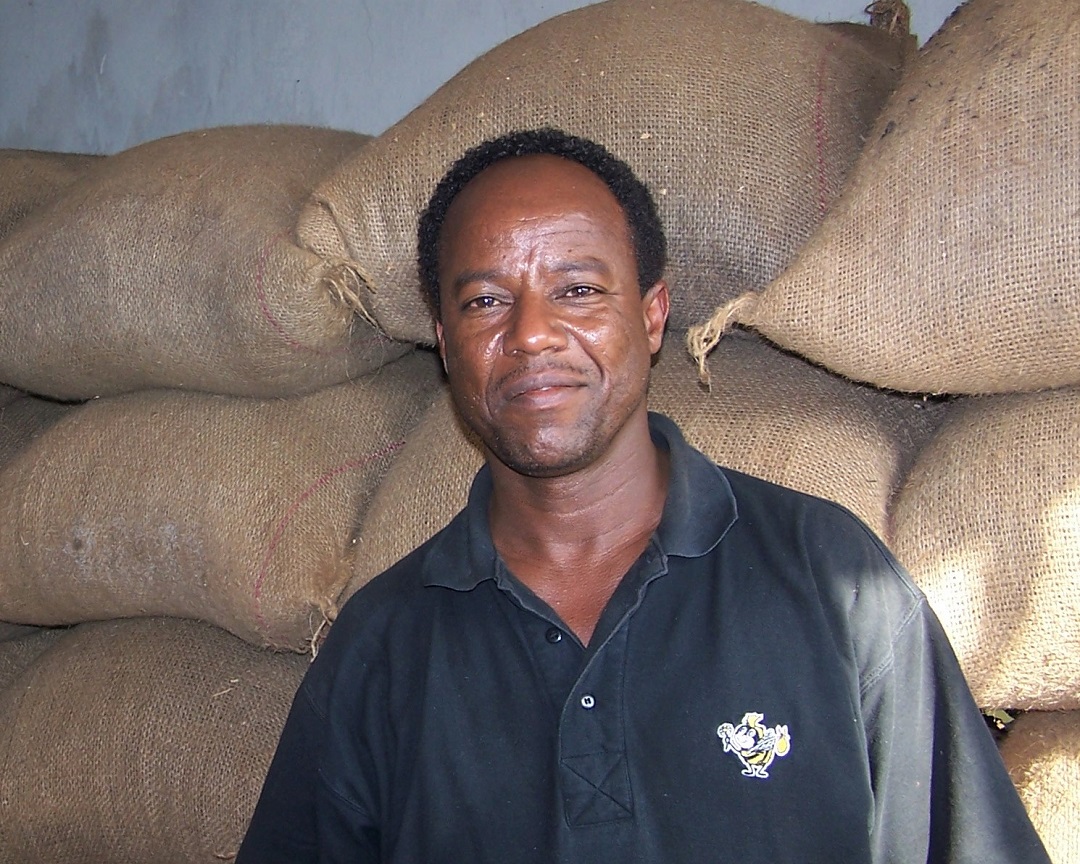
Here, in the temperate zone, the blooming of most flowering plants follows the length of days as well, blooming spring, summer, and fall. Few flowers are found in the winter, and the life cycle of the honey bee follows the availability of flowers. The bees gather nectar from flowers, convert it into honey, and survive on it through the winter. The honey bee is unique, being the only insect in the temperate zone that stays alive and active throughout the winter. Honey bees eat the high-energy honey that they produce and generate heat by vibrating their flight muscles. They are thus able to survive in cold weather, clustered tightly together to retain warmth. Other insects, like lady bug beetles, hibernate in cold weather, protected under tree bark or leaves. Wasps, hornets, and yellowjackets die off annually, leaving a mated queen to start the next year’s colony. I communicated today with my friend, EAS Certified Master Beekeeper Wubishet Adugna, in Ethiopia, shown here with coffee that he exports. Wubishet’s tropical honey bees follow seasonal changes based upon annual rainfall patterns instead of the length of days.
--Richard

Friday, August 17, 2018

Jon Zawislak


His name is Jon Zawislak; it rhymes with “Zah-FISH-Lock,” but everyone knows him simply as “Jon Z.” Jon’s known by beekeepers across the state of Arkansas and beyond for his engaging beekeeping training regularly accentuated with humor. Jon is an Eastern Apicultural Society Master Beekeeper and Arkansas’ State Extension Apiculturist. In this position, Jon trains beekeepers and conducts research on honey bee health issues. I have encountered numerous beekeeper students of Jon’s classes. They are enthusiastic, and they always feel like they are well-prepared by Jon’s instruction to start their beekeeping adventure. I have participated in some of his research. In one study, Jon searched for parasites that might be preying upon the invasive Small Hive Beetle. Sampling bees, combs, and soil surrounding the bee hives, Jon found on my farm and several other Arkansas sites a parasite attacking these pest beetles. The parasite has the potential of being a biological control of Small Hive Beetles, https://peacebeefarm.blogspot.com/2011/10/are-beetles-vulnerable.html. Jon also participated in a study of the effect of neonicotinoid insecticides on honey bees, https://peacebeefarm.blogspot.com/2015/02/neonics-questioned_12.html. While many wanted to blame the widely-used class of insecticides for causing excessive bee colony losses, Jon made measurements to get an accurate assessment of the effect of the insecticides. It now appears that the neonicotinoids are not the sole cause of the losses, but instead one of several contributing factors. Jon is always available to answer a technical question. When a reader of this blog questioned the mechanism for honey bees’ passing along genetic information, I asked Jon to explain for me, https://peacebeefarm.blogspot.com/2012/09/honey-bee-super-sisters.html. I am particularly grateful for Jon’s participation with the Arkansas Beekeepers Association as an active member of our leadership, https://peacebeefarm.blogspot.com/2015/11/bee-lining-in-ozarks.html.

Jon Zawislak received the prestigious 2018 Roger A. Morse Outstanding Teaching/Extension Service/Regulatory Award at the Eastern Apicultural Society’s conference at Hampton, Virginia. Dr. Morse developed the EAS Master Beekeeper program at Cornell University. Jon provided me the encouragement to complete my EAS Master Beekeeper certification. He is truly an inspiration. Congratulations, Jon Z.
--Richard