Monday, December 24, 2018

Pax Vobiscum

A beekeeper friend who is an avid outdoorsman proclaims, “I’d rather catch a swarm of bees than a five-pound bass!” Beekeepers manage colonies of honey bees for various purposes: honey production, crop pollination, to improve fruit orchards and vegetable garden production. However, many beekeepers tend to hives simply for enjoyment. Friendships develop between beekeepers who work hives together. Beekeeping tasks vary throughout the year with some months considerably busier than others. Winter months require little work inside the hives where the bees are alive and active, but clustered together for warmth and not flying. At this time of year, beekeepers can construct and repair hive equipment, plan for the next year’s activities, and devote some leisure time to reading. I like to reread some of my favorite beekeeper authors, such as Richard Taylor. He offers thoughtful views of beekeeping in The Joys of Beekeeping, 1984. Taylor writes of the relationship between bees, beekeepers, and nature. He explains, “When I see a bee tree I know its inhabitants are the evolutionary product of millions of years, and that what I call ‘my own’ bees are but the smallest step from the bee tree. The forests lure them back and always will.” Regarding the swarms that my friend loves to catch, Taylor says, “Swarming is of course essential not only to the survival of the species but also to nature itself, for without bees the many plants—both wild and cultivated—that depend upon them for the viability of their seed would also be threatened with extinction.”

While setting-up my backyard hives for winter, I noticed a downy woodpecker that has learned to use a twig as a tool to gather food from a suet feeder. Taylor writes, “We need the whole of nature, and we need to be reminded that we are a part of it.” The Underhill family of Peace Bee Farm wishes you good health, and cheer, healthy bees, and enjoyment of nature. May peace be with you.
--Richard

Friday, December 21, 2018

The Winter Solstice

The sun rose this morning as far south along the horizon as it will appear anytime through the year. We call this day the winter solstice. This is also the year’s shortest day. Starting tomorrow, the sun will appear to rise slightly farther to the north daily until the summer solstice, June 21, when the sun rises in its northern-most position. These apparent movements of the sun along the horizon have been observed since ancient times. They allowed early peoples to develop calendars, vitally necessary for telling farmers when to plant precious seeds needed to feed increasing populations. The life cycles of many species are tied to the seasonal changes associated with the length of days. Among those species is the honey bee. For the honey bee, the winter solstice is the beginning of the new year. Queen bees start laying eggs on the winter solstice.

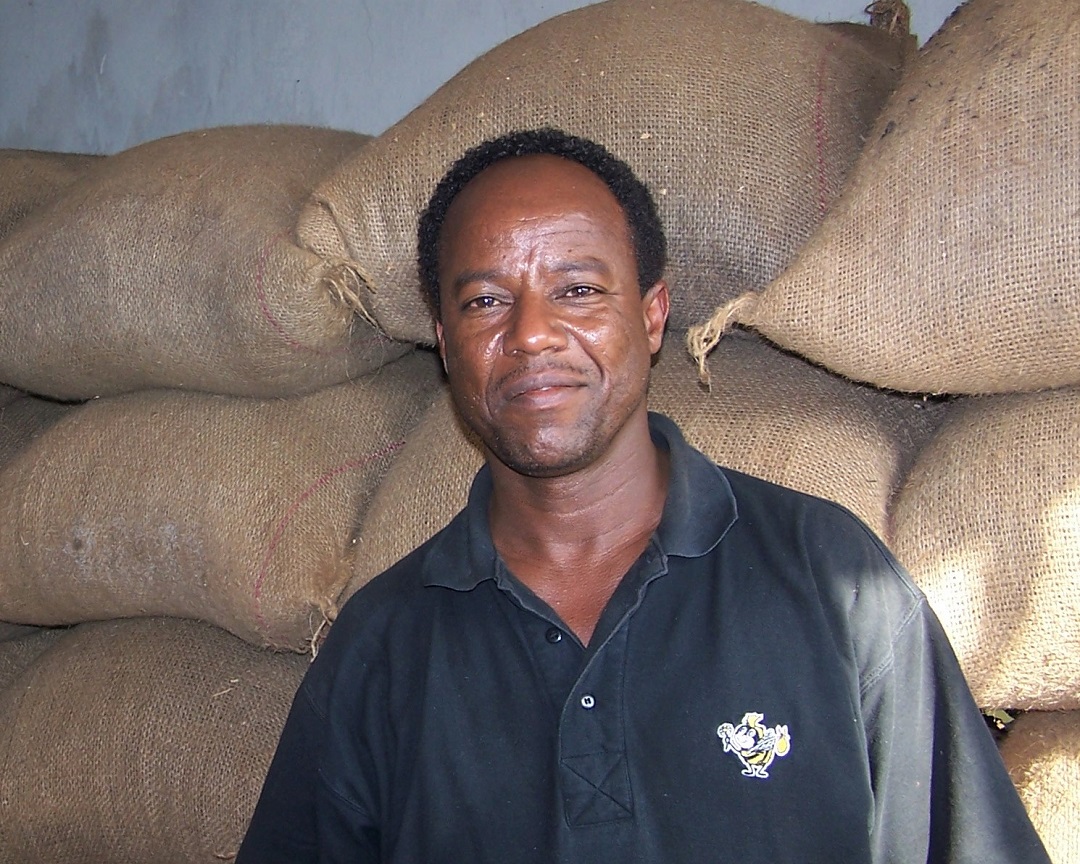
Here, in the temperate zone, the blooming of most flowering plants follows the length of days as well, blooming spring, summer, and fall. Few flowers are found in the winter, and the life cycle of the honey bee follows the availability of flowers. The bees gather nectar from flowers, convert it into honey, and survive on it through the winter. The honey bee is unique, being the only insect in the temperate zone that stays alive and active throughout the winter. Honey bees eat the high-energy honey that they produce and generate heat by vibrating their flight muscles. They are thus able to survive in cold weather, clustered tightly together to retain warmth. Other insects, like lady bug beetles, hibernate in cold weather, protected under tree bark or leaves. Wasps, hornets, and yellowjackets die off annually, leaving a mated queen to start the next year’s colony. I communicated today with my friend, EAS Certified Master Beekeeper Wubishet Adugna, in Ethiopia, shown here with coffee that he exports. Wubishet’s tropical honey bees follow seasonal changes based upon annual rainfall patterns instead of the length of days.
--Richard

Monday, December 10, 2018

Propolis for Bee Health

Propolis is one of four substances, along with nectar pollen, and water, that foraging honey bees bring into their hive. The collection of propolis is an important colony protection behavior. Bees collect propolis from the sap, gums, and resins of trees, often evergreens. The sticky substance is used to seal cracks and small openings in the honey bee colony’s hive. It is the “bee glue” that attaches beeswax combs to the hive. When a swarm of bees moves into a hollow tree cavity, or when a beekeeper hives a colony in a new hive, the bees varnish the inside walls of their new home with propolis. Not only does the propolis provide a protective barrier against drafts and moisture, it also provides antimicrobial protections. Foraging bees returning to their hive walk across an antibacterial and antifungal “door mat” of propolis deposited at the hive entrance. Honey bees use propolis to help protect the colony from invaders. Bees entomb with propolis dead mice or intruding insects too large to drag from the hive, preventing the spread through the hive of bacteria from decaying pests. Bees also trap Small Hive Beetles in propolis “jails” within the hive.

The behavior of collecting propolis is a heritable trait. Some beekeepers in the past considered manipulating heavily propolized hives unnecessarily messy, and therefore selected for bees that collected little propolis. However, colony health benefits of having plenty of propolis in the hives makes it advantageous to encourage propolis collection. An article published in the Journal of Economic Entomology, https://entomologytoday.org/2018/11/28/propolis-how-beekeepers-encourage-better-hive-health/, describes how researchers tested several means of roughening the interior of bee hives to encourage bees to fill small openings with propolis. I regularly roughen new hive boxes with a steel brush and a jagged flint rock from Arkansas’ Boston Mountains. Researcher Dr. Keith Delaplane, entomology professor at the University of Georgia, describes encouraging bees to deposit extra propolis as partnering with biology. In today’s photo bees eagerly gather and reuse propolis from a recently opened hive.
--Richard

Tuesday, November 6, 2018

Fall Bee Hive Set-Up

Fall bee hive management tasks prepare the hives for the bees’ winter survival. When the beekeeper sets up the hives for winter on a warm fall day, he or she will make a number of observations and hive adjustments. First, the hives must be queen-right. We don’t need to actually locate the queen, just see evidence that the hives have a healthy queen. Finding eggs or larvae tell us that a queen has been laying eggs recently. Queen bees reduce their egg laying in the fall and usually stop laying eggs completely as winter approaches. If a colony is weak, we should combine it with a strong colony. It is best to take our winter losses in the fall and not risk losing valuable honeycombs to wax moths. It is extremely important for beekeepers to manage parasitic Varroa mite levels in the hives. We should sample the bees and measure the mites using an alcohol wash or powdered sugar roll test. If Varroa levels exceed a three percent threshold, then a mite treatment of the hives is needed. Bees in colonies with high mite levels have a shortened life expectancy, and these colonies often perish during cold weather due to a lack of sufficient bees to provide winter cluster warmth.

To successfully over-wintering bees, the hives must have sufficient winter stores of honey, properly placed so that the bees can access it; and the hives must have adequate ventilation, particularly at the top. Arkansas hives require approximately 60 pounds of honey stores. Frames of honey should be on the edges of the fall cluster of bees, and the majority of the honey should be above the bees’ cluster. The beekeeper will likely need to rearrange hive boxes or frames to place the fall cluster low in the hive. As the winter progresses, the bee cluster will slowly move upward, eating through the stored honey. Remove all queen excluders, and reduce hive entrances as in today’s photo.
--Richard

Saturday, September 8, 2018

September Beekeeping

September brings changes for the bees. Summer flowers, yielding light colored and mild flavored honeys for the kitchen table, are replaced by fall flowers, producing robust flavored honeys, which beekeepers usually leave in the hives for the bees to consume over winter. Adrian Higgins describes how homeowners can plant flowering plants to provide a continuum of blooms providing nectar and pollen for honey bees throughout the spring, summer, and fall: https://www.arkansasonline.com/news/2018/sep/08/a-boon-to-bees-20180908/. As well as listing numerous species available for horticultural plantings, Higgins reminds us to provide bees water and avoid using pesticides. Another recent publication, About You Digital Magazine, http://aymag.com/all-the-buzz-arkansas-beekeepers-keep-hope-alive/, features Arkansas beekeeping friends, Jon Zawislak of the University of Arkansas Extension and John and Corinne Smith of Central Beekeepers Supply of Russellville, Arkansas. Apiary instructor, Jon Zawislak, explains the plight of honey bees that are stressed by parasites, pathogens, and loss of habitat. He explains that public awareness of the importance of honey bees in the production of our food has brought in many new beekeepers. John and Corinne Smith supply these beekeepers with bees, hives, and equipment at their Russellville business. John Smith explains the importance of bees, “Any non-wind-blown crop has to be pollinated by insects. And the honey bee is the world’s most efficient pollinator.” Zawislak is quite the promoter of Arkansas honey: “Fresh raw honey is so different and superior to what sits on most supermarket shelves that there is really no comparison. If you have ever eaten a true Arkansas homegrown tomato in the middle of the summer, you understand how different it is from those tough pink things labeled as a tomato in the supermarket in the winter. The difference in honey is like that.”

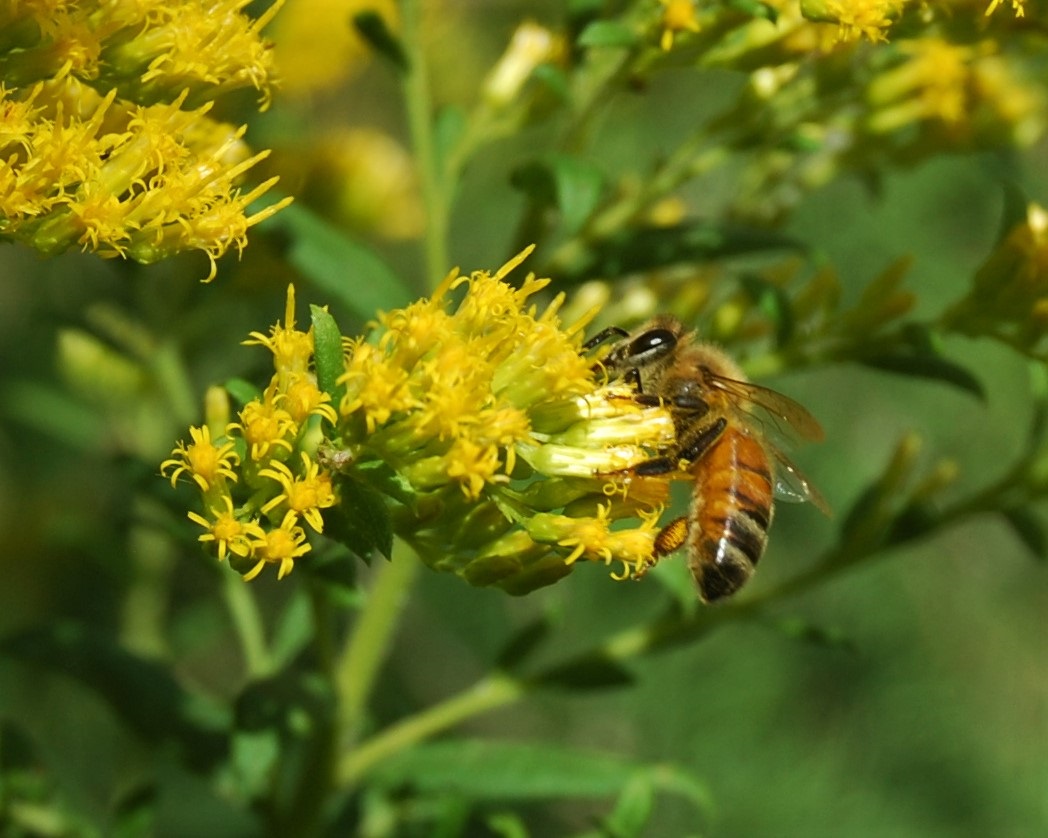
Elsewhere in Arkansas, a black bear was removed from the city of Conway near the University of Central Arkansas campus (UCA mascot is a bear). Several members of the Ozark Foothills Beekeepers Association, based in Conway, have experienced bears visiting their bee hives. Today’s photo: September goldenrod.
--Richard

Friday, August 17, 2018

Jon Zawislak


His name is Jon Zawislak; it rhymes with “Zah-FISH-Lock,” but everyone knows him simply as “Jon Z.” Jon’s known by beekeepers across the state of Arkansas and beyond for his engaging beekeeping training regularly accentuated with humor. Jon is an Eastern Apicultural Society Master Beekeeper and Arkansas’ State Extension Apiculturist. In this position, Jon trains beekeepers and conducts research on honey bee health issues. I have encountered numerous beekeeper students of Jon’s classes. They are enthusiastic, and they always feel like they are well-prepared by Jon’s instruction to start their beekeeping adventure. I have participated in some of his research. In one study, Jon searched for parasites that might be preying upon the invasive Small Hive Beetle. Sampling bees, combs, and soil surrounding the bee hives, Jon found on my farm and several other Arkansas sites a parasite attacking these pest beetles. The parasite has the potential of being a biological control of Small Hive Beetles, https://peacebeefarm.blogspot.com/2011/10/are-beetles-vulnerable.html. Jon also participated in a study of the effect of neonicotinoid insecticides on honey bees, https://peacebeefarm.blogspot.com/2015/02/neonics-questioned_12.html. While many wanted to blame the widely-used class of insecticides for causing excessive bee colony losses, Jon made measurements to get an accurate assessment of the effect of the insecticides. It now appears that the neonicotinoids are not the sole cause of the losses, but instead one of several contributing factors. Jon is always available to answer a technical question. When a reader of this blog questioned the mechanism for honey bees’ passing along genetic information, I asked Jon to explain for me, https://peacebeefarm.blogspot.com/2012/09/honey-bee-super-sisters.html. I am particularly grateful for Jon’s participation with the Arkansas Beekeepers Association as an active member of our leadership, https://peacebeefarm.blogspot.com/2015/11/bee-lining-in-ozarks.html.

Jon Zawislak received the prestigious 2018 Roger A. Morse Outstanding Teaching/Extension Service/Regulatory Award at the Eastern Apicultural Society’s conference at Hampton, Virginia. Dr. Morse developed the EAS Master Beekeeper program at Cornell University. Jon provided me the encouragement to complete my EAS Master Beekeeper certification. He is truly an inspiration. Congratulations, Jon Z.
--Richard


Friday, August 10, 2018

Build-Up, Behavior, Brood

After evaluating a honey bee colony’s over-winter survival success, the beekeeper can observe other desirable traits for continuous stock improvement. The speed of a bee colony’s springtime population build-up is determined by the queen’s genetic make-up. It is also affected by the age of the queen and the queen’s successful mating with a large number of drones. Conditions in the environment also affect spring build-up. Favorable weather, producing ample pollen from flowers stimulates the queen to lay eggs. The beekeeper can stimulate the queen in the same manner by feeding pollen substitute in late winter and early spring. A honey bee colony’s behavior is largely dependent upon the queen’s genetics. Excessively defensive behavior can result from inbreeding or Africanized Honey Bee genetics. Drones in the hive’s surrounding area can influence a hive’s behavior if the drones impart defensive genes during queen mating flights. Environmental conditions also affect a honey bee colony’s behavior. A normally gentle colony is likely to become highly defensive if the hive is attacked by skunks at night. The beekeeper’s actions in manipulating the hive greatly affect the bees’ defensive behavior.

A bee hive’s brood pattern should contain large areas of continuous capped cells of pupae with few empty cells. Today’s photo is an example of an excellent brood pattern produced by a prolific queen. However, genetic conditions can negatively affect the brood pattern. Inbreeding results in brood with many empty cells. The bacterial infections, European foulbrood and American foulbrood, also leave brood with many empty cells. An environmental factor affecting brood pattern is the presence of Varroa mite-infested hives in the surrounding area which may spread these parasitic mites, often by workers robbing weak or collapsing hives. In the early spring, it is common for bees to fill brood nest cells needed by the queen for egg laying with nectar. The beekeeper can significantly affect a hive’s brood pattern by rearranging frames to help prevent brood nest congestion during a strong nectar flow.
--Richard